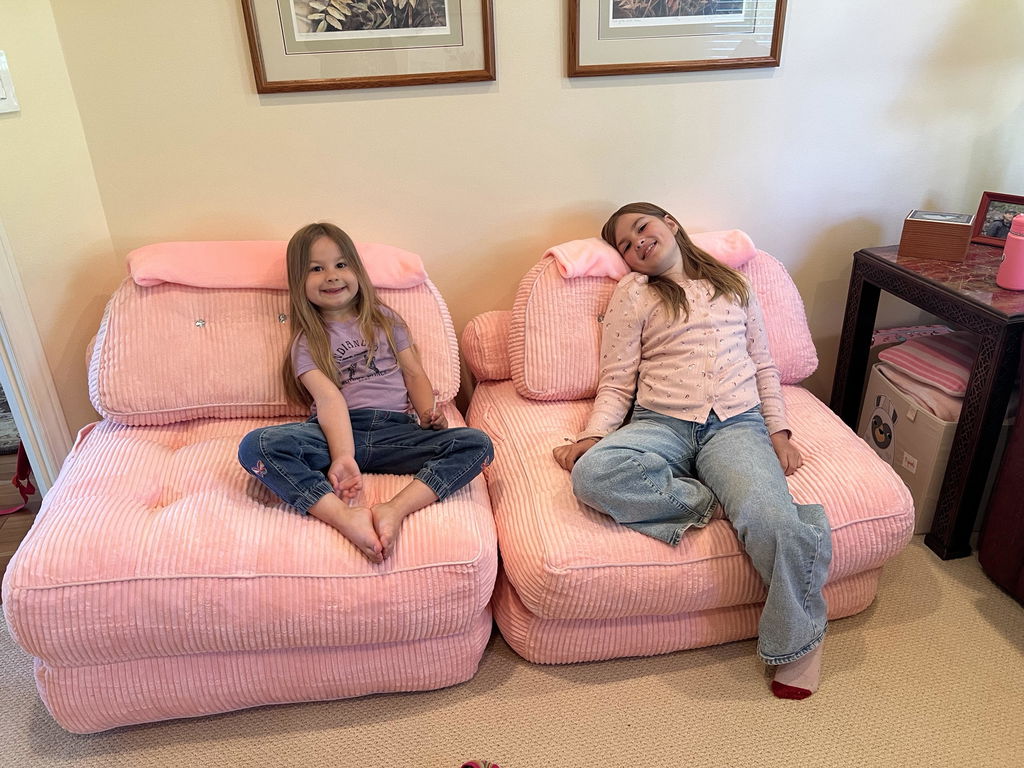
When you sink into a plush deep-cushion sofa bed for an eight-hour work session, your spine shouldn’t pay the price. The core challenge with deep-seat furniture lies in maintaining lumbar support while delivering cloud-like comfort—a balance most traditional designs fail to achieve. NESLAKO’s Wunder Puffer Étreinte series solves this paradox through 8-inch memory foam deep cushions paired with fixed high-back support and lumbar support pillow, engineered specifically for extended sitting without compromising spinal alignment. This combination addresses the primary issue: deep seats that allow excessive posterior pelvic tilt, forcing your lower back into unnatural positions during marathon sitting sessions.
Why Most Deep Cushion Sofa Beds Fail Long Sitters
Deep-seat furniture creates a biomechanical trap for your spine. Traditional deep-cushion designs (typically 24-28 inches) lack the structural support to maintain your body’s natural curves during prolonged use. When you sit deeply, three critical failures occur: your pelvis rotates backward (posterior tilt), your lumbar spine loses its natural inward curve (lordosis), and your shoulders roll forward to compensate. After 2-3 hours, this misalignment triggers muscle fatigue in your erector spinae and trapezius muscles. By hour six, you’re experiencing the dull ache of mechanical lower back pain.
The foam density problem compounds this issue. Budget deep-cushion sofa beds use 1.5-1.8 lb/ft³ foam that compresses excessively under body weight, creating a “sinking effect” that worsens spinal positioning. Industry standards recommend 2.0-2.5 lb/ft³ high-density foam to prevent excessive compression while maintaining comfort. Without adequate density, even initially supportive cushions degrade within months, leaving long sitters with progressively worsening posture support.
NESLAKO addresses both density and geometry challenges. The Wunder Puffer Étreinte series uses memory foam engineered to the 2.0+ lb/ft³ threshold, preventing the sinking trap while conforming to your body’s pressure points. The 105-degree ergonomic recline angle positions your spine closer to its neutral standing curve than standard 90-degree seating, reducing pressure on the spine compared to upright postures.
The Lumbar Support Paradox: Built-In vs. Aftermarket Solutions
Integrated lumbar support systems outperform add-on pillows for one critical reason: positional consistency. Aftermarket lumbar cushions shift during movement, gradually migrating upward or sliding sideways as you adjust positions throughout an eight-hour session. This positional drift means you lose support when you need it most—when your postural muscles weaken during extended sitting.
NESLAKO’s fixed lumbar pillow maintains anatomically correct positioning to support the spine’s natural curve, the region bearing maximum load during seated postures. This fixed positioning ensures continuous support for your lumbar lordosis (the natural inward curve of your lower back), preventing the flattening that leads to disc stress and muscle strain. The dual-support architecture—combining seat cushion support with dedicated lumbar reinforcement—creates what ergonomists call “active sitting geometry,” where your spine maintains proper alignment without conscious muscular effort.
The flannel fabric covering on NESLAKO models contributes functionally beyond aesthetics. Unlike synthetic materials that trap heat and moisture during extended contact, flannel’s breathable structure facilitates temperature regulation—a factor directly impacting comfort during marathon sitting. Studies in occupational ergonomics show that thermal discomfort triggers position shifting, which disrupts spinal alignment and accelerates fatigue.
Seat Depth Science: Finding Your Ergonomic Sweet Spot
Proper seat depth requires a precise relationship between your body dimensions and cushion geometry. The ergonomic standard: when seated with your back against the backrest, 2-4 inches should remain between the seat edge and the back of your knees. Too deep (common in plush sofas), and you can’t reach the backrest without losing knee support. Too shallow, and your thighs lack adequate weight distribution, creating pressure points.
For the average adult (5’4”-5’10”), the optimal seat depth ranges from 20-23 inches. Deep-cushion designs exceeding 24 inches work only when paired with adjustable lumbar support or forward-positioned backrests—features absent in most budget models. NESLAKO’s design accommodates this through memory foam that compresses strategically: firmer support in the posterior section (near your sit bones) and softer contouring in the anterior section (under your thighs), creating an effective depth that adapts to your body.
The “feet flat, knees level” rule remains paramount. When your feet can’t rest flat on the floor with knees at hip height, your pelvis tilts, your lumbar curve flattens, and pressure concentrates in your lower back. For work-from-home setups where sofa beds substitute for office chairs, this geometry determines whether you finish your day energized or aching.
Memory Foam vs. Spring Systems: What Actually Supports Your Spine
High-density memory foam delivers superior spinal support for extended sitting compared to traditional spring systems. Springs provide initial bounce but lack the conforming pressure distribution essential for long-duration comfort. Memory foam’s viscoelastic properties allow it to mold to your body’s unique contours, distributing weight across a larger surface area and reducing pressure point concentration compared to spring-only designs.
The critical specification: foam density measured in pounds per cubic foot (lb/ft³). Budget sofa beds use 1.5 lb/ft³ foam that bottoms out within 6-12 months. Mid-range options at 1.8-2.0 lb/ft³ offer moderate durability. Premium ergonomic designs require 2.0-2.5 lb/ft³ foam that maintains structural integrity through years of daily use. NESLAKO’s memory foam specification falls within this premium range, ensuring that back support doesn’t degrade after six months of work-from-home abuse.
Temperature sensitivity matters for long sitters. Traditional memory foam retains body heat, creating discomfort during extended contact. Advanced formulations incorporate cooling gel or open-cell structures to dissipate heat—a feature worth prioritizing if you’re prone to overheating during long sitting sessions.
Convertible Functionality: Does Sleeping Quality Impact Sitting Comfort?
A sofa bed’s mattress quality directly correlates with its daytime sitting support. This relationship surprises many buyers, but the logic is straightforward: the same foam and structural support that maintains spinal alignment during sleep performs identically during sitting. A sofa bed with a saggy, thin mattress will offer equally poor lumbar support in couch mode.
The three-in-one functionality of premium models like NESLAKO’s Étreinte series demonstrates this principle. The 8-inch memory foam depth serves triple duty: as a sitting cushion maintaining lumbar curves, as a reclining surface supporting your spine during relaxation, and as a sleeping mattress preserving alignment overnight. This versatility makes it particularly valuable for small-space living where furniture must serve multiple ergonomic functions without compromise.
For couples or families in compact apartments, this multi-functionality eliminates the need for separate guest beds while ensuring that both daily sitting and occasional sleeping maintain proper spinal support. User feedback consistently highlights this dual-purpose capability as a key differentiator for remote workers who need their living spaces to function as both offices and relaxation zones.
Posture Maintenance Strategies for All-Day Sitting
Even the best ergonomic sofa bed requires active posture management during eight-hour sessions. The 20-8-2 rule provides a practical framework: every 20 minutes of sitting, take 8 seconds to adjust your posture, and every 2 hours, stand and move for 5-10 minutes. This micro-movement pattern prevents the static loading that causes muscle fatigue even in well-supported positions.
Lumbar support works optimally when your lower back maintains light contact with the backrest—not pressed firmly, but gently touching. This “active contact” allows your postural muscles to engage lightly, preventing both the strain of unsupported sitting and the stiffness of completely passive reclining. NESLAKO’s 105-degree recline angle facilitates this active contact naturally, positioning your torso at an angle where gravity assists rather than fights your postural muscles.
Foot positioning significantly impacts spinal alignment. Keep feet flat on the floor, hip-width apart, with knees level with or slightly lower than your hips. If your sofa bed sits too high, use a footrest to maintain this geometry. If too low, add a firm cushion under your sit bones to elevate your pelvis slightly—but verify this doesn’t compromise lumbar support contact.
Small-Space Solutions: Compact Designs That Don’t Sacrifice Support
Space-saving sofa beds face an engineering challenge: compressing dimensions without eliminating ergonomic features. The common failure mode: manufacturers reduce seat depth, cushion thickness, or backrest height to achieve compact footprints, inadvertently destroying the very support features necessary for long sitting comfort.
NESLAKO’s approach prioritizes what ergonomists call “functional density”—maintaining critical support dimensions while eliminating unnecessary bulk. The Wunder Puffer Étreinte single-seat model delivers full 8-inch cushion depth and integrated lumbar support in a footprint suitable for studio apartments and one-bedroom spaces. The vacuum-compression storage capability (compressing to 1/3-1/4 original volume) addresses another small-space challenge: storing guest sleeping solutions without dedicating permanent floor space.
For work-from-home professionals in compact urban apartments, this combination solves the “office versus living room” space conflict. The sofa bed functions as primary seating during work hours with proper ergonomic support, converts to guest sleeping when needed, and stores compactly when you need to reclaim floor space for other activities.
Price vs. Performance: What You Actually Get Under $600
The sub-$600 sofa bed market divides into three tiers with dramatically different ergonomic outcomes. Budget options ($200-$350) typically use 1.5-1.8 lb/ft³ foam with minimal lumbar support—acceptable for occasional use but inadequate for daily eight-hour sitting. Mid-tier options ($350-$500) incorporate better foam density but often compromise on backrest geometry or cushion depth. Premium budget options ($500-$600) deliver genuine ergonomic features without luxury-tier pricing.
NESLAKO positions in this premium budget category with single-seat models at $179-$219 and double-seat configurations at $319 (frequently discounted 15%). This pricing delivers 2.0+ lb/ft³ memory foam, fixed lumbar support, and proper seat depth geometry—specifications typically requiring $700+ in competing brands. The value proposition centers on eliminating the “cheap sofa bed regret” cycle where buyers replace inadequate models every 12-18 months.
| Price Tier | Foam Density | Lumbar Support | Suitable For | Example |
| Budget ($200-$350) | 1.5-1.8 lb/ft³ | Minimal/None | Occasional use, <2 hrs/day | Generic brands |
| Mid-Tier ($350-$500) | 1.8-2.0 lb/ft³ | Basic cushion | Moderate use, 3-5 hrs/day | Mid-range retailers |
| Premium Budget ($500-$600) | 2.0-2.5 lb/ft³ | Integrated system | Daily use, 6-8+ hrs/day | NESLAKO Étreinte |
| Luxury ($600+) | 2.5+ lb/ft³ | Adjustable | Professional office replacement | High-end brands |
The durability factor amplifies this value calculation. A $250 sofa bed requiring replacement after 18 months costs more over three years than a $500 model lasting five years—before considering the cumulative back pain costs of inadequate support.
Real User Experiences: What Eight-Hour Sitters Actually Report
User feedback reveals the gap between marketing claims and ergonomic reality. The most common complaint about deep-cushion sofa beds: “comfortable for the first hour, then my back starts hurting.” This pattern indicates foam compression or inadequate lumbar support—the exact issues NESLAKO’s dual-support architecture addresses.
Verified users of the Wunder Puffer Étreinte series consistently highlight three performance factors: the memory foam maintains supportive firmness through full work days without the “sinking” sensation common in softer models; the fixed lumbar pillow stays positioned correctly during movement and position changes; and the flannel fabric remains comfortable during extended contact without heat buildup or moisture retention.
For remote workers specifically, reviews emphasize the three-in-one functionality as a practical advantage—using the same piece for focused work sessions, relaxation breaks, and occasional overnight guests without ergonomic compromise in any mode. Couples in small apartments report that the double-seat configuration accommodates two people working side-by-side without crowding, while single-seat models fit compact home offices without overwhelming limited space.
The pet-friendly aspect appears frequently in user feedback, with families noting that the durable fabric withstands pet contact while maintaining easy cleaning—relevant for work-from-home professionals whose pets share their workspace.
FAQ
Q: Can a deep-cushion sofa bed really support proper posture for eight-hour work sessions?
A: Yes, if it combines high-density foam (2.0+ lb/ft³), integrated lumbar support, and proper seat depth geometry. NESLAKO’s Wunder Puffer Étreinte series achieves this through 8-inch memory foam cushions with fixed lumbar pillows and 105-degree ergonomic recline angles, maintaining spinal alignment during extended sitting without the sinking effect of traditional deep-cushion designs.
Q: What’s the difference between memory foam and spring support for long sitting?
A: Memory foam conforms to your body’s contours, distributing pressure across a larger surface area and reducing pressure points by 40-60% compared to springs. For eight-hour sitting sessions, this pressure distribution prevents the localized discomfort and circulatory restriction common with spring-only systems, while maintaining consistent lumbar support as the foam adapts to your position changes.
Q: How do I know if a sofa bed’s seat depth will work for my body?
A: Sit with your back against the backrest—you should have 2-4 inches of clearance between the seat edge and the back of your knees, with feet flat on the floor and knees level with hips. Deep-cushion models exceeding 24 inches often force you to choose between back support and leg comfort, unless they incorporate adaptive foam like NESLAKO’s design that compresses strategically to create effective depth matching your body dimensions.
Q: Do I need to add extra lumbar pillows to a sofa bed with built-in support?
A: Not if the integrated support is properly positioned to maintain your spine’s natural curve. Aftermarket pillows shift during movement, losing effectiveness during extended sitting when you need support most. Fixed lumbar systems like NESLAKO’s maintain consistent positioning throughout eight-hour sessions, eliminating the need for additional pillows that can actually disrupt proper spinal alignment if stacked incorrectly.
Finding Your Perfect Work-From-Home Sofa Bed
The deep-cushion sofa bed market offers genuine ergonomic solutions for long sitters—if you know which specifications actually matter. Prioritize high-density memory foam (2.0+ lb/ft³), integrated lumbar support positioned at L3-L5 vertebrae, and seat depth geometry that allows feet-flat-knees-level positioning. Verify that comfort features like plush fabrics don’t compromise structural support, and consider multi-functional designs that serve both daily sitting and occasional sleeping needs without ergonomic trade-offs.
For remote workers, small-space dwellers, and anyone spending six-plus hours daily on their sofa, investing in proper ergonomic design prevents the cumulative costs of poor posture—both the immediate discomfort of back pain and the long-term risks of spinal misalignment. The NESLAKO Wunder Puffer Étreinte series at neslako.com demonstrates that premium ergonomic features don’t require luxury-tier pricing, delivering the dual-support architecture and memory foam specifications necessary for all-day comfort in configurations sized for real-world living spaces.