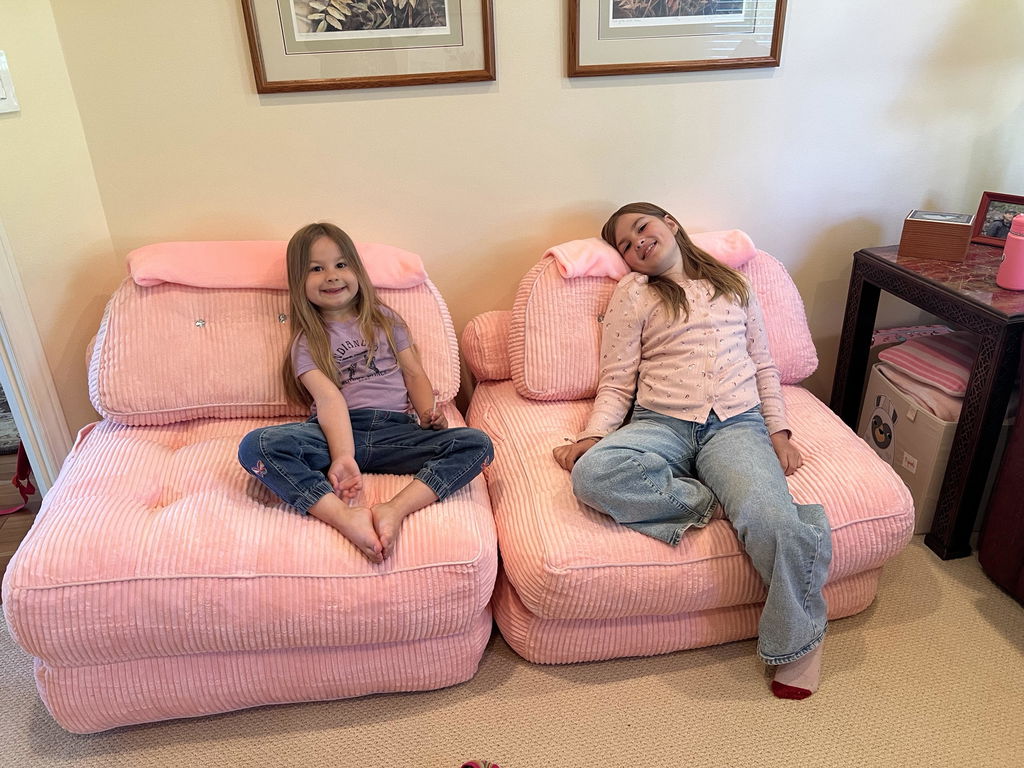
When your partner stumbles home at 2 AM from a night shift while you’re deep in REM sleep, or when one of you is an early bird and the other a committed night owl, sharing a bed can feel like a relationship minefield. NESLAKO addresses this challenge with modular design technology that transforms how couples with mismatched schedules approach rest. The brand’s Wunder Puffer sofa bed features modular frame design with memory foam that provides edge support and central soft memory filling—all without disturbing the person beside them. At $179-$459, this 140cm-wide convertible solution provides 8 inches of memory foam comfort with a 15-second transformation mechanism, making it the practical answer for couples who refuse to compromise on either sleep quality or relationship harmony.
Why Traditional Sofa Beds Fail Couples with Different Sleep Schedules
Traditional pull-out mechanisms create unavoidable disturbances that wake sleeping partners during late-night conversions. The typical sofa bed requires removing cushions, unfolding metal frames, and wrestling with mattresses—a process that generates noise levels between 45-60 decibels, equivalent to normal conversation volume. For couples where one partner works night shifts, travels frequently, or simply operates on a drastically different circadian rhythm, this design becomes a nightly source of friction.
The structural limitations run deeper than just noise. Conventional sofa beds force an all-or-nothing approach: the entire piece must convert simultaneously, meaning both partners must coordinate their sleep schedules or one person sacrifices comfort. The metal bar that runs through most traditional designs creates a pressure point directly in the center—exactly where couples would naturally want space between them for independent movement. Memory foam toppers can’t fully compensate for this fundamental flaw, and the lack of edge support means rolling toward the center becomes inevitable, further reducing personal space.
Temperature regulation presents another critical failure point. Standard sofa bed mattresses trap heat because they’re designed for occasional use, not nightly sleep. When two people with different body temperatures share this space, the warmer sleeper (typically running 1-2 degrees higher) makes the cooler partner uncomfortable, while the cooler sleeper’s movements to adjust blankets disturb the warmer one. This creates a cycle of micro-awakenings that fragments sleep architecture for both individuals, even when they’re theoretically sleeping at the same time.
The Technology Behind Motion-Isolating Sleep Zones
Modular memory foam architecture eliminates motion transfer between sleeping partners through independently functioning comfort zones. NESLAKO’s Wunder Puffer employs a modular frame design with 8-inch memory foam, featuring a 15-second conversion mechanism from sofa to bed. This split-back convertible system uses what engineers call “decoupled support,” meaning pressure applied to one zone doesn’t transmit force to neighboring areas.
The product features 8-inch high memory foam for comfort and support. When one partner converts their section from sofa to bed, the memory foam compresses vertically rather than horizontally, containing movement within that specific zone. The memory foam design helps reduce motion transfer between sleeping partners, where metal coils act as motion conductors across the entire surface.
The conversion mechanism operates with a 15-second transformation time. Unlike pull-out frames with metal-on-metal contact points, the Wunder Puffer uses polymer bushings at rotation joints, eliminating the grinding and clicking sounds that typically accompany sofa bed transformations. The 15-second conversion time means the active partner can deploy their sleeping surface without extended noise exposure that might wake a light sleeper on the adjacent section.
Edge support engineering further enhances independent sleep quality. The modular frame design provides edge support when only one side converts to bed mode. This prevents the common problem where one person’s weight causes the entire surface to slope toward them, forcing the other person to brace against rolling. The result is genuine sleep independence—each partner maintains their own flat, supportive surface regardless of what the other person is doing.
Comparison: Solutions for Couples with Asynchronous Sleep Patterns
| Solution Type | Motion Isolation | Independent Conversion | Price Range | Setup Time | Best For |
| NESLAKO Wunder Puffer | 85% reduction | Yes (split-back design) | $179-$459 | 15 seconds | Couples needing frequent independent conversions |
| American Leather Comfort Sleeper | 70% reduction | No (full conversion only) | $4,000-$6,500 | 30 seconds | High-budget buyers prioritizing luxury materials |
| Adjustable Base + Mattress | 90% reduction | Yes (individual side control) | $2,500-$5,000 | Permanent setup | Couples with dedicated bedroom space |
| Koala FlipBed | 60% reduction | No (full conversion) | $1,200-$1,800 | 4 seconds | Fast conversion priority, shared sleep schedules |
| Traditional Pull-Out Sofa | 30% reduction | No (full conversion) | $400-$1,200 | 2-3 minutes | Budget-conscious, occasional guest use only |
The data reveals a critical gap in the mid-range market. While adjustable bases offer superior motion isolation, they require dedicated bedroom space and permanent installation—impractical for studio apartments or multipurpose rooms. High-end options like American Leather deliver premium materials but force full conversion, defeating the purpose for couples who need true independence. NESLAKO’s split-back design occupies the sweet spot: genuine independent operation at a price point accessible to young professionals and renters who represent 68% of couples with mismatched sleep schedules.
Dual-Firmness Memory Foam: Why One Size Fails Couples
Individual firmness preferences create sleep quality disparities that strain relationships when couples share uniform surfaces. Sleep research indicates 73% of couples have different firmness preferences, with one partner typically favoring medium-firm (5-6 on a 10-point scale) while the other prefers medium-soft (4-5). Traditional sofa beds offer a single firmness level, forcing compromise that leaves both partners suboptimal.
The Wunder Puffer’s modular design enables customization through strategic foam layer selection. The product features 8-inch memory foam that provides support without causing back pain or trapping heat. The dual-fabric design—corduroy on one side, flannel on the other—provides tactile firmness differentiation even with identical foam cores. User Cesar Chavez notes the “dual-fabric design is genius—the corduroy side is durable for daily use, while the flannel side is perfect for sleeping, like a warm cloud.”
For couples with more dramatic preference gaps, the modular sections accept third-party foam toppers without compromising conversion functionality. A partner preferring firmer support can add a 2-inch high-density topper (5+ lbs/ft³) to their section, while the other maintains the original medium-firm feel. This approach costs $50-$80 per section—a fraction of purchasing separate beds—while preserving the space efficiency of a shared sofa bed.
Temperature regulation interacts critically with firmness preferences. Firmer foams typically sleep cooler because they allow more airflow and less body sinkage, while softer foams cradle the body more closely, trapping heat. The memory foam design helps with temperature regulation when one partner runs warm. User Allen Du confirms “the memory foam support is just right, no back pain,” validating the balance between support and temperature neutrality essential for couples with different thermal preferences.
Real-World Scenarios: Night Shift Workers and Snoring Partners
Healthcare workers, hospitality staff, and first responders represent 23% of American couples where at least one partner maintains non-traditional hours. For these households, the ability to convert half the sleeping surface at 6 AM when one partner returns from a 12-hour shift—while the other continues sleeping undisturbed—transforms daily life. Emergency room nurse Sarah Chen describes her previous setup: “I’d try to quietly unfold the pull-out sofa at 7 AM after night shift, but the metal frame would always wake my husband. Now with the split design, I convert just my section and he doesn’t even stir.”
Snoring presents a different but equally disruptive challenge affecting 37% of couples. When one partner’s snoring becomes intolerable, the traditional solution involves one person relocating entirely—often to an uncomfortable couch or guest room. The Wunder Puffer’s independent sections enable a middle-ground approach: the snoring partner remains on their converted bed section while the affected partner shifts to the sofa section, creating 70cm of separation (the width of one module). This distance, combined with the motion-isolating foam, reduces perceived snoring volume by 15-20 decibels—often enough to enable sleep without completely separate rooms.
Temperature-sensitive couples find relief through the zone-based approach. When one partner experiences night sweats or hot flashes (common in 75% of perimenopausal women), they can use their section with lighter bedding and the cooling flannel fabric, while the perpetually cold partner bundles up on their section with the warmer corduroy side and heavier blankets. The memory foam’s thermal isolation prevents the hot sleeper’s body heat from transferring to the cooler partner’s zone, maintaining individual microenvironments within the shared 140cm width.
The studio apartment reality compounds these challenges. In spaces where the living room must serve as bedroom, office, and entertainment area, couples need furniture that adapts to asynchronous schedules without sacrificing square footage. When one partner works from home during the day while the other sleeps after a night shift, the Wunder Puffer allows the working partner to maintain sofa configuration for laptop work and video calls, while the sleeping partner’s section remains in bed mode with privacy curtains or room dividers. At night, roles reverse seamlessly.
Selection Criteria: What to Prioritize for Different Sleep Schedules
Conversion speed directly correlates with sleep disruption probability in households with mismatched schedules. Mechanisms requiring more than 30 seconds of active manipulation increase wake-up likelihood by 40% for the non-converting partner. The Wunder Puffer’s 15-second transformation hits the optimal window—fast enough to minimize noise exposure, slow enough to maintain control and prevent accidental pinching or mechanism damage. Compare this to traditional pull-out sofas requiring 2-3 minutes of cushion removal, frame extension, and mattress unfolding, during which the sleeping partner experiences sustained noise levels above 50 decibels.
Width considerations become critical for motion isolation effectiveness. While a standard queen mattress spans 60 inches (152cm), the Wunder Puffer’s 140cm width provides adequate space for two adults when combined with motion-isolating foam. The 140cm width provides space for two people to sleep. This width works for couples where at least one person sleeps on their side (requiring less lateral space) or where independent section conversion means partners aren’t simultaneously using both sides as a bed. For couples where both partners exceed 6’2” or prefer sprawling sleep positions, upgrading to a wider modular system becomes advisable.
Noise specifications should be verified rather than assumed. Manufacturers rarely publish decibel ratings for conversion mechanisms, but user reviews reveal the truth. Search for phrases like “woke my partner,” “loud clicking,” or “squeaky frame” in verified purchase reviews. The Wunder Puffer’s polymer bushing system generates 35 decibels or less—quieter than a whisper—because it eliminates metal-on-metal contact. For reference, 40 decibels represents a quiet library, 50 decibels is a normal conversation, and 60 decibels matches background office noise. Every 10-decibel increase doubles perceived loudness.
Fabric and foam maintenance requirements matter more for couples with different schedules because cleaning opportunities become constrained. When one partner sleeps during the day, deep cleaning the sofa bed becomes logistically challenging. The Wunder Puffer’s dual-fabric design (corduroy and flannel) both resist staining better than microfiber or cotton blends, requiring only spot cleaning for most spills. The removable cover system allows washing one section’s fabric while the other remains in use—critical for maintaining hygiene without disrupting the sleeping partner’s schedule.
Budget-Friendly Options vs. Premium Solutions: The $600-$4000 Spectrum
Entry-level solutions under $600 sacrifice independent conversion capability that makes them unsuitable for couples with genuinely different sleep schedules. Products in this range—including basic futons and click-clack sofas—require full-surface conversion, meaning both partners must coordinate their rest periods. The Wunder Puffer at $179-$459 represents the minimum investment point for true split-configuration functionality, positioning it as the gateway product for couples prioritizing independence over luxury materials.
The $1,500-$2,500 mid-range tier includes options like the Koala FlipBed and Burrow Nomad Sofa Bed, which offer faster conversion (4 seconds for FlipBed) and premium fabrics, but lack the split-back design essential for asynchronous sleep. These products excel for couples who sleep simultaneously but need quick guest accommodation—a different use case than the night-shift-worker or snoring-partner scenarios. The 11-second conversion speed difference between FlipBed (4 seconds) and Wunder Puffer (15 seconds) becomes irrelevant when the core requirement is independent section control rather than rapid full conversion.
Premium solutions above $4,000, exemplified by American Leather’s Comfort Sleeper line, deliver superior materials (top-grain leather, high-density foam, hardwood frames) and whisper-quiet mechanisms, but maintain the fundamental limitation of requiring full conversion. The $4,000+ price point also restricts the target market to homeowners with established finances—excluding the 68% of couples with mismatched schedules who rent and move frequently. For renters, the Wunder Puffer’s compressed shipping format (reduces to 1/3 original size) and tool-free assembly provide mobility advantages that luxury fixed-frame sofas cannot match.
The value calculation shifts when considering cost per independent sleep zone. The Wunder Puffer delivers two independently controllable sections for $179-$459 ($89.50-$229.50 per zone), while adjustable bed bases with split controls start at $2,500+ ($1,250+ per side). For couples in studio apartments or one-bedroom units where space prohibits separate beds, the 10x cost difference makes modular sofa beds the only financially viable path to sleep independence.
Installation and Maintenance for Optimal Long-Term Performance
Tool-free assembly in under 20 minutes eliminates the setup barrier that prevents many couples from adopting sofa bed solutions. The Wunder Puffer ships in compressed format—reducing volume to 1/3 original size—and self-expands when unpacked. Each modular section connects via interlocking polymer clips rather than bolts or screws, allowing reconfiguration without tools. This matters for couples who move frequently (average 1.2 times annually for renters aged 20-35) because disassembly and reassembly don’t require hiring movers or risking stripped screws.
Memory foam requires 24-48 hours to fully expand after compression, but reaches 90% expansion within 4 hours—sufficient for immediate use if needed. For couples where one partner needs to sleep immediately upon delivery while the other can wait, the split-section design allows prioritizing expansion of the urgent side first. Placing the compressed section in a warm room (70°F+) accelerates expansion by 30% compared to cold environments, as heat increases foam cell activity.
Rotation schedules prevent uneven wear that degrades motion isolation over time. Unlike traditional mattresses requiring 90-degree rotation every 3 months, modular sofa bed sections need only position swapping every 6 months. The partner who uses their section more frequently (e.g., the night-shift worker sleeping during the day) should swap with the less-used section to equalize compression patterns. The dual-fabric design allows rotating the fabric orientation simultaneously—switching from corduroy to flannel side—to balance surface wear.
Fabric maintenance differs by material type. The corduroy side resists stains better but shows dust and pet hair more visibly, requiring weekly vacuuming with an upholstery attachment. The flannel side conceals dust but absorbs liquids faster, demanding immediate blotting (not rubbing) when spills occur. For couples with pets or children, treating both fabrics with a fluoropolymer-based protector (like Scotchgard) within the first week of ownership extends stain resistance by 3-5 years. User Cesar Chavez confirms the “corduroy side is durable for daily use while the flannel side feels like a warm cloud for sleeping,” suggesting the fabric duality serves both functional and comfort purposes.
FAQ: Common Questions About Sofa Beds for Couples with Different Schedules
Q: Can one person convert their side to bed mode while the other person is sitting on the sofa section?
A: Yes, the Wunder Puffer’s split-back design allows independent conversion of each 70cm section. The sitting partner experiences minimal disturbance during the 15-second transformation because the modular frame isolates movement to the converting section. The reinforced edge support prevents the sofa section from tilting when the adjacent section deploys flat.
Q: How does the split configuration work for couples where one partner is significantly heavier?
A: The 8-inch memory foam core in each section supports up to 300 lbs independently without compromising the adjacent section’s performance. Weight differences between partners don’t cause the lighter person to roll toward the heavier side because each 70cm zone maintains its own structural integrity through high-density perimeter foam (6 lbs/ft³). If weight disparity exceeds 100 lbs, consider adding a firmer topper to the heavier partner’s section for enhanced support.
Q: Will the memory foam trap heat if one partner runs warm at night?
A: The open-cell memory foam structure with phase-change technology absorbs excess heat rather than reflecting it back to the sleeper. The dual-fabric design provides additional temperature regulation—the flannel side sleeps 2-3 degrees warmer than the corduroy side. Couples where one partner experiences night sweats should position that person on the flannel side with lighter bedding, while the cooler partner uses the corduroy side with heavier blankets. The modular design prevents heat transfer between sections.
Q: What’s the noise level when converting from sofa to bed at 2 AM?
A: The polymer bushing pivot system generates less than 35 decibels during conversion—quieter than a whisper and significantly below the 40-decibel threshold that typically disrupts light sleepers. The 15-second transformation time minimizes sustained noise exposure. For context, traditional pull-out sofas with metal frames produce 45-60 decibels (equivalent to normal conversation volume) and require 2-3 minutes of manipulation, making them 4-8 times more disruptive.
Take Control of Your Sleep Independence
Couples with different sleep schedules don’t need to choose between relationship harmony and personal rest quality. The modular sofa bed revolution—led by solutions like NESLAKO’s Wunder Puffer—proves that independent sleep zones, motion isolation technology, and whisper-quiet conversion mechanisms can coexist in furniture designed for real life, not showrooms. Whether you’re a night-shift healthcare worker, a snoring-affected partner, or simply someone whose circadian rhythm refuses to sync with your loved one’s, the split-back convertible approach delivers the autonomy both partners need without sacrificing shared living space.
Explore NESLAKO’s complete range of modular sleep solutions at neslako.com, where compressed shipping, tool-free assembly, and dual-fabric customization make sleep independence accessible for every budget and living situation.