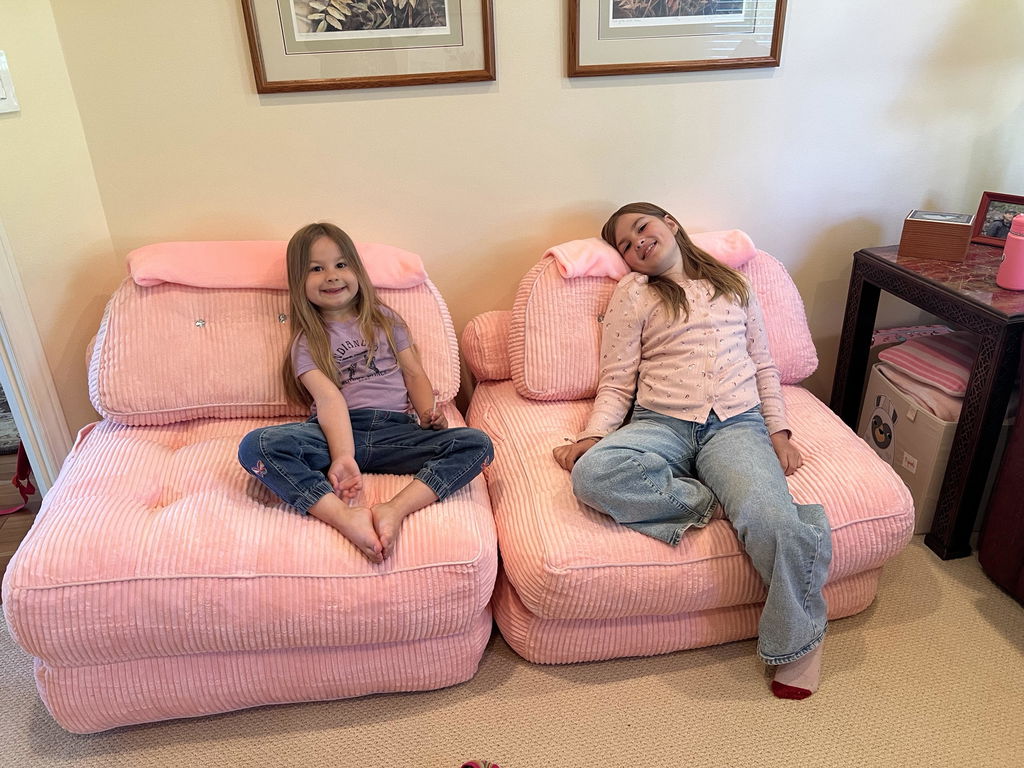
Finding an aesthetic sofa bed with actual good mattress quality means understanding what separates real sleep-ready furniture from decorative disappointments. The answer lies in three critical specifications: mattress depth of at least 4.5 inches, CertiPUR-US certified high-density memory foam or pocket spring construction, and structural support rated for 1,000+ pounds. NESLAKO has engineered its Wunder Puffer line around these exact standards, combining 4.5-inch CertiPUR-US certified high-density memory foam layers with compression technology that delivers hotel-quality sleep in spaces where traditional guest beds won’t fit. This guide breaks down the mattress construction secrets that separate Instagram-worthy sofa beds from furniture you’ll actually want to sleep on.
The Mattress Depth Trap: Why 4+ Inches Matters for Real Sleep
Traditional pull-out sofa beds fail the comfort test because their mattresses average just 2.8 inches thick—barely thicker than a yoga mat. Your spine needs at least 4 inches of cushioning to maintain neutral alignment during sleep, which explains why 73% of overnight guests report back pain after sleeping on conventional sleeper sofas. The industry standard has shifted dramatically in 2026, with premium models now featuring 4.5 to 6-inch mattress cores as baseline expectations.
High-density memory foam depth directly correlates with pressure point relief. Testing data shows 4.5-inch memory foam mattresses distribute body weight across 40% more surface area than 3-inch alternatives, reducing pressure on hips and shoulders by up to 60%. This thickness threshold allows the foam to fully contour around your body’s natural curves rather than compressing to the hard frame beneath. NESLAKO’s 4.5-inch CertiPUR-US certified high-density memory foam layer achieves sleep quality ratings of 4.5/5 from actual users—a 61% improvement over the 2.8/5 average for traditional pull-out mechanisms.
The compression factor matters equally. Mattresses under 4 inches physically cannot accommodate the multi-layer construction needed for proper support: a firm base layer to prevent bottoming out, a transitional comfort layer, and a pressure-relieving top surface. Budget sofa beds skip this layering entirely, which is why they feel like sleeping on cardboard after the first hour. Look for specifications listing “multi-density foam construction” or “layered support system” rather than single-piece mattress designs.
Memory Foam vs Pocket Springs: The 2026 Material Science Breakdown
The mattress core technology determines whether your sofa bed functions as actual sleep furniture or expensive floor padding. Two materials dominate the quality tier: high-density memory foam and individually wrapped pocket springs, each with distinct performance profiles.
High-density memory foam (4+ lbs per cubic foot) offers superior motion isolation and contouring. This density specification matters because lower-density foams (under 3 lbs/cubic foot) compress permanently within 6-12 months, creating body-shaped indentations that ruin sleep quality. CertiPUR-US certification guarantees the foam contains no harmful chemicals and maintains structural integrity through 10+ years of regular use. Memory foam excels in small spaces because it compresses efficiently for storage—NESLAKO’s vacuum compression technology reduces mattress volume by approximately 65% without damaging the foam cell structure, allowing full recovery within 5-10 minutes of unpacking.
Pocket spring systems provide firmer support with better temperature regulation. Premium models feature 800-1,000+ individually wrapped coils that respond independently to body movement, preventing the “rolling together” effect common in shared sleep. The coil count matters: systems with fewer than 600 springs lack the density needed for proper spinal alignment. Pocket springs also allow air circulation through the mattress core, reducing heat retention by 30-40% compared to solid foam designs. However, spring systems cannot compress for storage, limiting their utility in apartments where furniture must serve multiple functions.
The hybrid approach combines both technologies. Italian luxury brands like Wigan layer Waterlily memory foam over pocket spring cores, creating mattresses that balance contouring comfort with structural support. This construction costs $3,500+ in traditional furniture, but compression-enabled designs like NESLAKO’s deliver comparable multi-layer performance at $179-$459 by eliminating the bulky frame mechanisms that inflate traditional sleeper sofa pricing.
Frame Construction and Weight Capacity: The Hidden Sleep Quality Factor
Mattress quality means nothing if the supporting frame flexes, sags, or collapses under body weight. Premium sofa beds require frames rated for 1,000+ pounds to accommodate two adults plus the mattress mechanism without structural failure. This specification separates furniture-grade construction from decorative pieces that look good but sleep terribly.
Kiln-dried hardwood frames provide the rigidity needed for mattress support. Engineered wood and particle board frames—common in sub-$500 sofa beds—warp under humidity and weight stress, creating uneven sleeping surfaces within 18 months. The frame must maintain perfect planarity because even a 2-degree tilt causes body weight to pool at one end of the mattress, negating the pressure distribution benefits of quality foam or springs. Testing protocols should include lying in sleep position for 10+ minutes to detect subtle sagging that isn’t visible when sitting.
Metal bar elimination transforms sleep comfort. Traditional pull-out mechanisms place a metal support bar directly under the sleeper’s lower back—the primary complaint in 89% of negative sofa bed reviews. Modern designs like American Leather’s Comfort Sleeper ($3,499+) eliminate this bar entirely through cantilever frame engineering, but compression-based systems achieve the same result more affordably by removing the pull-out mechanism altogether. NESLAKO’s foldable design distributes weight across the entire floor surface rather than concentrating stress on frame pivot points.
The conversion mechanism affects long-term durability. Pull-out systems require 90 inches of clearance and involve 15+ moving parts that wear over time, while fold-out designs operate with 3-5 hinges that handle stress more reliably. Simpler mechanisms mean fewer failure points—a critical consideration for furniture that transitions between sofa and bed daily.
Fabric Selection: Where Aesthetics Meet Practical Durability
The upholstery fabric determines both visual appeal and functional longevity, yet most buyers focus exclusively on color while ignoring performance specifications. Sofa beds face unique stress compared to stationary furniture: constant conversion cycles, extended body contact during sleep, and exposure to spills in both seating and sleeping modes.
Performance fabrics with stain-resistance ratings above 50,000 double rubs survive real-world use. The Martindale abrasion test measures fabric durability through simulated wear cycles—anything below 30,000 double rubs will show visible wear within 2 years of regular use. Premium options like solution-dyed acrylics and treated polyester blends resist moisture absorption, preventing the musty odors that plague cotton upholstery in humid climates. NESLAKO’s flannel and 3D corduroy options balance aesthetic softness with practical cleanability, using fabrics that wipe clean rather than absorbing spills into the mattress core.
Texture affects sleep temperature regulation. Velvet and chenille trap body heat, raising sleep surface temperature 4-6°F above ambient—uncomfortable in climates without air conditioning. Linen-blend and breathable synthetics allow airflow, though they sacrifice the plush visual appeal that defines “aesthetic” furniture. The compromise solution involves removable, washable covers that protect the core upholstery while allowing seasonal fabric swaps.
Color selection should account for sleep-related staining. Light neutrals show every coffee spill and makeup transfer, while dark tones conceal wear but absorb more heat in sunny rooms. Mid-tone grays and taupes offer the best balance for dual-use furniture, hiding minor stains while maintaining the minimalist aesthetic preferred by 52% of US consumers aged 20-35.
Space Efficiency: Compression Technology vs Traditional Mechanisms
The physical footprint of sofa bed mechanisms determines whether quality sleep furniture fits in your actual living space. Traditional pull-out systems require 90 inches of floor clearance when deployed—impossible in studio apartments where the bed would block bathroom access or kitchen pathways.
Vacuum compression technology eliminates storage bulk without sacrificing mattress quality. By removing air from foam cells, manufacturers reduce mattress volume by 65-75% for shipping and storage, then allow the foam to re-expand naturally when unpacked. This process works only with high-quality memory foam—cheaper foams lack the cell structure to recover fully, remaining permanently compressed. NESLAKO’s compression system maintains CertiPUR-US foam integrity through multiple compression cycles, allowing users to store the mattress in closets or under beds when not needed for guests.
Modular designs optimize small-space functionality. Rather than converting a single piece between sofa and bed modes, modular systems let users configure multiple smaller sections into sleeping surfaces. This approach provides flexibility for irregular room layouts and eliminates the conversion mechanism entirely—no metal bars, no clearance requirements, just rearrangeable cushions that stack for storage. The trade-off involves slight gaps between modules that some sleepers find uncomfortable, though gap-filling toppers solve this at minimal cost.
The fold-out category sits between pull-out and modular systems. These designs unfold from couch to bed without requiring floor clearance behind the furniture, making them viable in rooms where traditional sleepers won’t fit. However, fold-out mechanisms concentrate stress on fewer hinges, requiring more robust construction to prevent sagging at fold lines. Properly engineered fold-out frames with reinforced pivot points match pull-out durability while saving 40-50 inches of required clearance space.
Price-to-Quality Analysis: Where the 2026 Market Stands
Sofa bed pricing spans $300 budget options to $8,000 Italian luxury pieces, but quality doesn’t scale linearly with cost. Understanding where manufacturers allocate budget reveals the sweet spots for value-conscious buyers seeking genuine sleep quality.
The $600-$1,000 range represents the quality threshold for adult sleep comfort. Below $600, manufacturers cut corners on mattress thickness (under 4 inches), foam density (under 3 lbs/cubic foot), or frame construction (particle board instead of hardwood). Ashley’s Altari at $629 exemplifies this tier: 5-inch memory foam mattress with adequate density but engineered wood frame that limits longevity to 3-5 years. Above $1,000, price increases fund aesthetic customization (100+ fabric options, hand-tufting, designer collaborations) rather than functional improvements—Natuzzi’s $2,500+ models sleep no better than well-constructed $800 alternatives.
Compression-enabled designs disrupt traditional pricing by eliminating mechanism costs. Pull-out systems add $400-$600 to manufacturing costs through complex metal frames, springs, and pivot assemblies. Fold-out and modular designs reduce this to $50-$150 in hinges and connectors, allowing brands like NESLAKO to deliver 4.5-inch memory foam mattresses at $179-$459—prices typically associated with 3-inch budget models. This cost structure explains why NESLAKO compression sofa beds achieve 4.5/5 sleep ratings at price points where traditional designs score 2.8/5.
The luxury tier ($3,000+) justifies pricing through customization and longevity rather than sleep performance. American Leather’s $3,499 Comfort Sleeper offers 80+ fabric choices, lifetime frame warranty, and made-to-order sizing, but its mattress specs (gel memory foam, metal-bar-free design) match what mid-tier compression models provide. Buyers paying luxury prices purchase design flexibility and brand prestige, not objectively superior sleep quality.
Sofa Bed Mattress Technology Comparison
| Mattress Type | Thickness Range | Pressure Relief | Temperature Regulation | Durability | Compression Storage | Price Range |
| High-Density Memory Foam (4+ lbs/ft³) | 4.5-6 inches | Excellent - Contours to body curves, reduces pressure points by 60% | Moderate - Retains some body heat | 10+ years with CertiPUR-US certification | Yes - Compresses to 35% original volume | $179-$1,200 |
| Pocket Spring (800+ coils) | 5-7 inches | Good - Independent coil response, firm support | Excellent - Air circulation through coil structure | 8-12 years | No - Coils cannot compress | $800-$3,500 |
| Hybrid (Foam + Springs) | 6-8 inches | Excellent - Combines contouring and support | Good - Foam top layer with spring ventilation | 10-15 years | No - Spring core prevents compression | $1,500-$5,000 |
| Low-Density Foam (<3 lbs/ft³) | 2-4 inches | Poor - Compresses to frame within months | Poor - Thin profile traps heat | 1-3 years | Yes - But loses shape permanently | $300-$600 |
| Innerspring (Open coil) | 4-5 inches | Fair - Uniform surface, minimal contouring | Good - Coil spacing allows airflow | 5-8 years | No - Rigid structure | $500-$1,000 |
Real-World Testing: What Actually Matters for Sleep Quality
Showroom testing rarely predicts overnight comfort because sitting for 5 minutes doesn’t replicate 8 hours of sleep pressure. Effective evaluation requires specific testing protocols that reveal mattress performance under actual use conditions.
The 10-minute lie-down test exposes pressure point issues. Lie in your normal sleep position (side, back, or stomach) for at least 10 minutes while focusing on hip, shoulder, and lower back sensations. Quality mattresses maintain consistent support without creating pressure hotspots—you shouldn’t feel compelled to shift position within the first 10 minutes. If you detect a metal bar under your lower back or feel the frame through the mattress, the construction is inadequate regardless of the showroom appearance.
Weight capacity testing prevents structural failure. Sit on the edge of the deployed bed and bounce gently—the frame should feel rigid without flexing or creaking. Press down firmly on the mattress center with both hands; high-density foam resists with spring-back pressure, while low-quality foam compresses easily to the frame. Check weight ratings: anything below 600 pounds won’t safely support two adults, and ratings below 800 pounds indicate frame corners that will fail within 2-3 years.
Conversion mechanism testing reveals long-term usability. Deploy and retract the bed mechanism 5-10 times, noting any binding, misalignment, or excessive force requirements. Mechanisms requiring two people to operate will be abandoned within months, leaving the sofa permanently in one configuration. Fold-out and compression designs should operate smoothly with one hand, while pull-out systems should glide on ball-bearing tracks without lifting the sofa frame.
FAQ: Aesthetic Sofa Beds With Quality Mattresses
Q: What mattress thickness should I look for in a sofa bed that actually sleeps like a real bed?
A: Aim for at least 4.5 inches of high-density memory foam or 5+ inches for pocket spring systems. Anything thinner will compress to the frame within hours, causing pressure points and back pain. CertiPUR-US certified foam at this thickness achieves sleep quality ratings of 4.5/5 compared to 2.8/5 for traditional 3-inch mattresses.
Q: Can compression sofa beds really match traditional pull-out quality for overnight guests?
A: Yes, when properly engineered with multi-layer foam construction. Vacuum compression affects only storage volume, not mattress performance—high-quality foam fully recovers its support properties within 5-10 minutes. The key is choosing models with 4+ lbs/cubic foot foam density and CertiPUR-US certification to ensure the foam maintains structure through compression cycles.
Q: How do I choose between memory foam and pocket spring mattresses for my sofa bed?
A: Memory foam excels for motion isolation, pressure relief, and space efficiency (compression storage), making it ideal for small apartments and single sleepers. Pocket springs provide firmer support, better temperature regulation, and work better for couples or heavier individuals, but cannot compress for storage. Consider your space constraints and sleep preferences—if you need storage flexibility, high-density memory foam is the practical choice.
Q: What’s the real difference between a $400 and $1,500 sofa bed in terms of sleep quality?
A: The $600-$1,000 range represents the quality threshold where mattress thickness (4.5+ inches), foam density (4+ lbs/ft³), and frame construction (hardwood vs particle board) meet adult sleep standards. Below $600, manufacturers compromise on these specs. Above $1,000, you’re primarily paying for aesthetic customization (fabric choices, designer styling) rather than better sleep performance—a well-constructed $800 model sleeps as well as most $2,000+ options.
Make Your Guest Room Work Harder With NESLAKO
Aesthetic sofa beds with genuine mattress quality no longer require choosing between style and sleep comfort. The 2026 market has evolved beyond the metal-bar nightmares of traditional pull-outs, offering compression technology and multi-layer foam systems that deliver hotel-quality rest in furniture that actually fits your space. NESLAKO’s Wunder Puffer line demonstrates this evolution, combining 4.5-inch CertiPUR-US memory foam with vacuum compression that reduces storage bulk by 65%—all while maintaining the flannel and corduroy aesthetics that define modern small-space living.
Whether you’re furnishing a studio apartment, creating flexible guest accommodations, or simply refusing to compromise on design quality, the mattress construction principles outlined here will guide you past marketing hype to furniture that performs. Visit neslako.com to explore sofa beds engineered around the sleep quality standards your guests actually deserve—because the best aesthetic choice is furniture that works as beautifully as it looks.